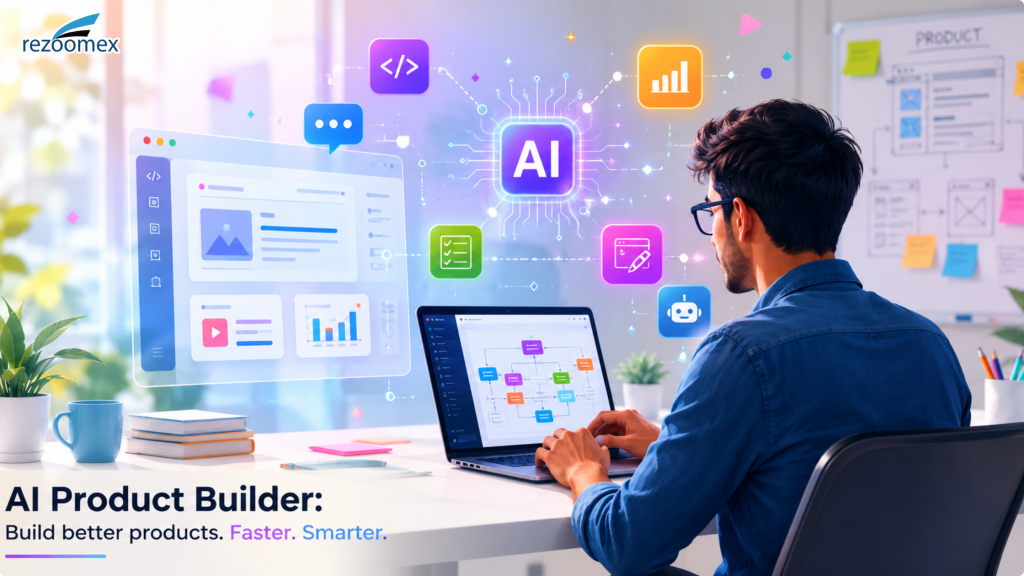
AI Product Builder: What It Is and How It Will Change Software Development

A person using a laptop to access an AI Product Builder tool, with graphical elements showcasing features like coding, charting, and a chatbot, in a modern workspace.

The Next Evolution of Building Software:

Over the past decade, software development has undergone several transformations. We moved from monolithic applications to microservices, from on-premise infrastructure to the cloud, and from waterfall development to Agile.

Today, another shift is underway—one driven by Artificial Intelligence.

AI can now generate code, create user interfaces, write documentation, suggest architecture, automate testing, and even debug applications. Tasks that once required hours of manual effort can now be completed in minutes.

This raises an important question:

Continue reading “AI Product Builder: What It Is and How It Will Change Software Development”

Trust: The Real Infrastructure of the Modern Digital Workplace

Remote work and digital collaboration have transformed how companies operate. Teams are now spread across cities, countries, and time zones. Meetings happen through screens, projects move across cloud platforms, and conversations that once happened in office hallways now happen through messages and video calls.

But while technology has made remote work possible, something far more important determines whether it actually succeeds:

Trust.

Continue reading “Trust: The Real Infrastructure of the Modern Digital Workplace”

Why Global Startups Are Building Products Without In-House Tech Teams

In the modern startup landscape, founding teams are increasingly choosing remote and outsourced development over traditional in-house engineering teams. This shift isn’t just about remote work—it’s a strategic response to cost pressures, global talent needs, and the speed of innovation required to succeed in competitive markets.

Continue reading “Why Global Startups Are Building Products Without In-House Tech Teams”