AI Product Builder: What It Is and How It Will Change Software Development

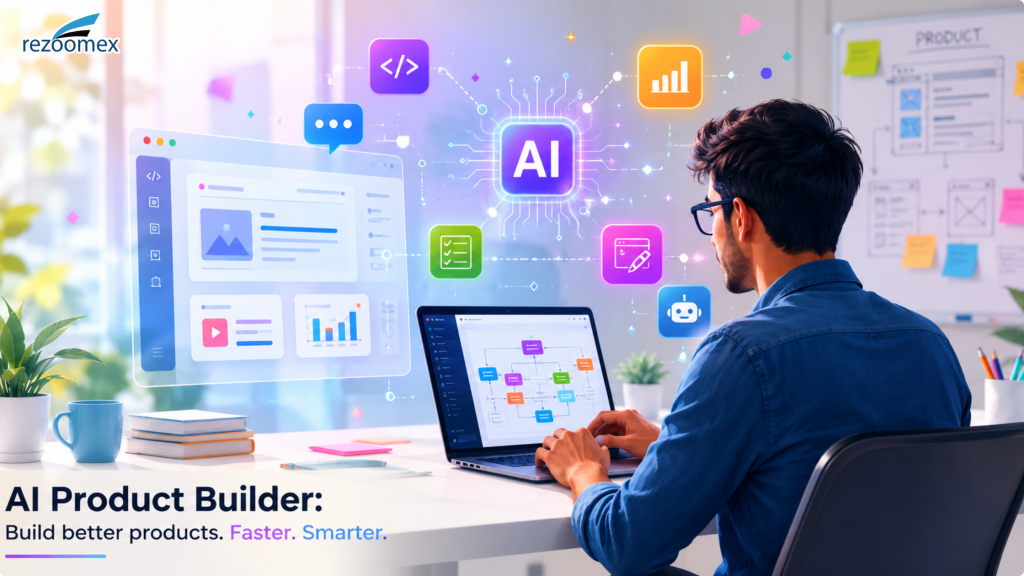
A person using a laptop to access an AI Product Builder tool, with graphical elements showcasing features like coding, charting, and a chatbot, in a modern workspace.

The Next Evolution of Building Software:

Over the past decade, software development has undergone several transformations. We moved from monolithic applications to microservices, from on-premise infrastructure to the cloud, and from waterfall development to Agile.

Today, another shift is underway—one driven by Artificial Intelligence.

AI can now generate code, create user interfaces, write documentation, suggest architecture, automate testing, and even debug applications. Tasks that once required hours of manual effort can now be completed in minutes.

This raises an important question:

Continue reading “AI Product Builder: What It Is and How It Will Change Software Development”

The 10 Founder Decisions That Determine Startup Success

A confident man with a beard in a gray suit, standing with arms crossed, in a professional setting with clocks in the background. The text on the right highlights 'The 10 Founder Decisions That Determine Startup Success' by Rezoomex.

Most founders believe startups succeed because of great ideas.

The data suggests otherwise.

According to CB Insights, the top reasons startups fail include lack of market need, running out of cash, poor team composition, pricing mistakes, and being outcompeted.

Notice something?. None of these are idea problems.

They are decision problems.

Continue reading “The 10 Founder Decisions That Determine Startup Success”

The Global Talent Operating System: How Companies Will Hire in the AI Era

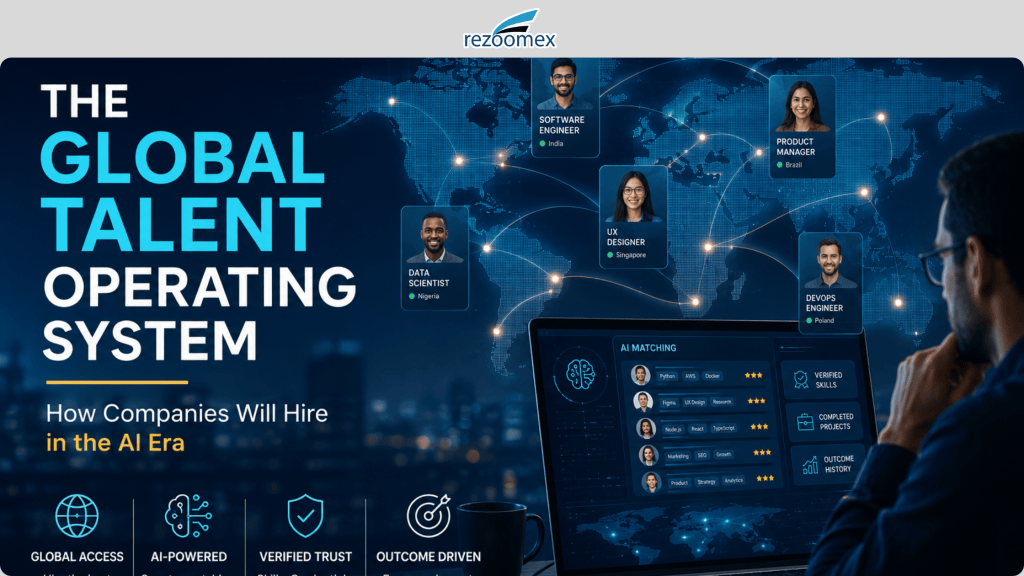
An infographic titled 'The Global Talent Operating System' illustrating how companies will hire in the AI era, featuring profiles of various professionals like a Data Scientist, Software Engineer, Product Manager, UX Designer, and DevOps Engineer from different countries, with elements highlighting AI matching and skills verification.

For decades, hiring followed a familiar formula.

A company opened a position. Recruiters searched locally. Candidates submitted resumes. Interviews followed. Eventually, someone was hired to work from a specific location for a predefined role.

That model is rapidly becoming obsolete.

The convergence of artificial intelligence, remote collaboration technologies, and access to global talent is creating something entirely new: a Global Talent Operating System.

In this emerging model, companies no longer hire based primarily on geography. They hire based on skills, outcomes, availability, and verified expertise.

The future of hiring is becoming borderless, data-driven, and increasingly programmable.

Organizations that adapt will gain access to the world’s best talent. Those that don’t may find themselves competing for shrinking local talent pools in an increasingly global market.

Continue reading “The Global Talent Operating System: How Companies Will Hire in the AI Era”